AI SDRs in B2B: why autonomous outreach bots fail – and what works instead
An AI SDR promises the whole pipeline machine: find contacts, write emails, send, follow up, book meetings, all without a human. In sales-led, high-ACV B2B, that rarely ends well. Below I go through where autonomous outreach bots break, where AI does help SDR work, and why signal-based outreach with a human go builds more pipeline than extra volume ever will.
 ByMario Maier
Published 18 min read
Contents
- Why AI SDRs sound so tempting right now
- What is an AI SDR, and what do the tools promise?
- Why autonomous outreach breaks in high-ACV B2B
- Deliverability: what Google and Yahoo require from bulk senders
- Is AI SDR cold email legal in Germany and Austria?
- Where AI does help SDR work
- The alternative: signal-based outreach with a human go
- Example: AI SDR or signals with a go?
- Before you buy an AI SDR tool: ten questions
- Which metrics count and which just look good
- My take: how to start in 90 days
Why AI SDRs sound so tempting right now
Few topics come up in my conversations as often as the AI SDR. The demos are impressive, I'll give them that. An agent finds matching companies, identifies contacts, writes each one a “personal” email, follows up three times and drops meetings into your account executive's calendar. No hiring, no ramp time, no sick days, no resignation after eight months. For a revenue team under pressure, it sounds like the answer.
I get the appeal. SDR work is expensive, turnover is high, and a big chunk of the day disappears into research, list maintenance and copy-paste. Add a pipeline target the current team can't realistically hit, and a tool promising “1,000 personalized emails a day” looks like a shortcut.
Except an AI SDR solves a task that isn't the bottleneck in sales-led, high-ACV B2B. I've yet to meet a team whose problem was sending too few emails. What's missing are relevant conversations with the right accounts at the right time, and more volume doesn't fix that. Often it makes it worse.
Output ↑. Pipeline →.
I'm deliberately critical here, though not dismissive. First, what these tools promise and where fully autonomous outreach breaks in your market (buying committees, brand, deliverability, law). Then where AI earns its keep in SDR work, and the alternative I build: signal-based outreach with a human go. Further down you'll find a comparison table, a worked example, the metrics I look at and ten questions to put to any vendor.
What is an AI SDR, and what do the tools promise?
An AI SDR (also sold as an “AI BDR,” “AI sales development rep” or “digital worker”) is software that takes over the tasks of a sales development representative using language models and automation. Depending on the vendor, that ranges from a writing assistant to a fully autonomous agent that sends without human review. This article is about the second kind.
The typical promise has five parts:
- Prospecting: the agent builds target contact lists from databases, LinkedIn and websites, often from nothing more than a short ICP description.
- Research and personalization: for each contact it gathers hooks (a post, a job ad, funding, news) and turns them into an opener.
- Writing: it drafts the first email and follow-ups, supposedly in your brand voice.
- Sending and following up: it sends from its own domains and mailboxes, usually with “warm-up” and rotation, and follows up automatically.
- Replying and booking: it answers questions, handles objections and books meetings.
Steps one to three are preparation. Steps four and five have external effect: they reach people at your target accounts, in your company's name. That line is where a tool either helps you or hurts you.
The promise
- 1,000 emails a day
- “Personalized” in seconds
- Follow-ups with no human
- Meetings on the calendar
The reality
- Small market, burned fast
- One line of context, then a pitch
- Spam rate, domain burn
- Meetings often outside ICP
What an autonomous AI SDR promises – and how much of it actually lands in sales-led, high-ACV B2B.
I don't doubt that AI can write a good email. What I want to know is who decides that this email goes to this person right now.
Why autonomous outreach breaks in high-ACV B2B
For transactional business with small tickets, huge markets and short cycles, volume-driven outbound can work. If you sell to tens of thousands of small businesses, you can afford to burn an address. In sales-led B2B with five- or six-figure ACVs, different rules apply. What I see in projects again and again boils down to four reasons.
1. You sell to a buying committee
An AI SDR thinks in contacts: contact in, sequence out. Your deals, however, are decided by a committee of economic buyer, champion, functional owner, IT and procurement. Email three people at one account without coordination and it looks random, especially since the recipients talk to each other (more often than you'd think). The agent doesn't know the CFO said no two months ago, or that your AE is building a business case with the champion right now, unless you build that knowledge in. How to map a committee systematically is covered in buying committee research with agents.
2. “Personalization” is usually just a variable
Most automated emails follow the same pattern: one line about a LinkedIn post or a news item, then the standard pitch. People in your ICP often get several of these a week. They spot the pattern within two lines. Relevance comes from a hypothesis about the account's situation: why now, why this role, which proof fits? Better copy won't get you there, because it's a knowledge problem. Without a documented ICP, message angles and proof points, even the best model just produces generic copy faster.
3. Brand risk scales too
A person who writes a bad email writes one bad email. An agent with a flawed rule writes five hundred. Hallucinated facts about the recipient's company, wrong names, a follow-up to someone who already said no, a claim your product can't back up: all of it goes out under your name. On top of that, your market in high-ACV B2B is often small. The 400 accounts you want are the same 400 that will remember you.
4. The agent optimizes for the wrong thing
Autonomous systems need a goal. For most AI SDR tools, it's roughly “meetings booked” or “positive replies.” Both can be pushed up with volume, and you pay for it in fit, domain and reputation. A meeting with an account outside your ICP looks good on the dashboard, but it ties up an account executive who could have spent that hour with a prospect who fits.
AI without a system just produces the wrong thing faster.
Deliverability: what Google and Yahoo require from bulk senders
The second big breaking point is technical, and it almost never makes it into the demo. Since 2024, Google and Yahoo have enforced binding rules for high-volume senders, and enforcement keeps tightening. The key points as of October 2026 (check the linked originals before you rely on them):
- Who counts as a bulk sender? According to Gmail's email sender guidelines, anyone sending roughly 5,000 or more messages to personal Gmail accounts within 24 hours. Google says that once you hit that threshold, you're classified as a bulk sender permanently.
- Authentication: bulk senders need SPF, DKIM and DMARC, and the From domain must align with SPF or DKIM. The Yahoo Sender Hub likewise requires SPF, DKIM and a DMARC policy of at least p=none.
- Spam rate: Google recommends keeping the spam rate reported in Postmaster Tools below 0.1% and never reaching 0.3%. Above that, according to Google's FAQ, you lose eligibility for delivery mitigation until the rate stays below the threshold for several consecutive days. Yahoo also names 0.3% as the limit.
- One-click unsubscribe: promotional email needs a List-Unsubscribe header with one-click unsubscribe per RFC 8058. Both Google and Yahoo say unsubscribe requests must be honored within two days.
- Enforcement: Google announced that, starting November 2025, it would increasingly reject non-compliant messages or route them to spam. Microsoft has introduced comparable requirements for Outlook.com, covering domains that send more than 5,000 emails a day.
Now the math no demo shows you. Say an AI SDR sends 500 emails a day, all of them to Gmail. At 0.3%, it takes just 1.5 spam clicks a day, on paper, to breach the hard limit, and at 0.1% half a click does it. So two annoyed recipients a day are enough, which, with cold outreach nobody asked for, isn't a high bar.
Strictly speaking, the Gmail thresholds apply to personal accounts, and many of your B2B recipients sit on Google Workspace or Microsoft 365. Still, in my experience the filters behind them aren't more forgiving just because an email goes to a company address. Many vendors respond with domain rotation: extra lookalike domains, lots of mailboxes, automated warm-up. That spreads the risk and leaves the problem where it was. To me it mostly shows that the model is built on volume recipients don't want.
If an outreach model only works with spare domains, it isn't a sales process. It's a burn-down process.
Is AI SDR cold email legal in Germany and Austria?
Up front: I'm not a lawyer, and this isn't legal advice. Anyone who wants to use an AI SDR to reach prospects in Germany, Austria or Switzerland still has to answer these questions before buying, because the legal situation differs sharply from what many US tools treat as normal.
Germany: Section 7 UWG
Under Section 7(2) no. 2 of the German Unfair Competition Act (UWG), advertising by electronic mail without the recipient's prior express consent counts as an unreasonable nuisance. Unlike phone calls, where presumed consent may be enough when calling a business, the law provides no B2B carve-out for email. The existing-customer exception in Section 7(3) is narrow: the address must come from a sale, the offer must be for similar products of your own, and the customer must have been told they can object. Cold first-touch email generally doesn't qualify under the common reading. The usual consequences are cease-and-desist letters and injunction claims, brought by competitors or by recipients themselves.
Austria: Section 174 TKG 2021
In Austria, Section 174 of the Telecommunications Act 2021 governs direct marketing by email. As a rule, it's prohibited without the recipient's prior consent, and the wording doesn't distinguish between consumers and businesses. The Austrian Economic Chamber (WKO) also points out that an address published online doesn't count as consent, and that violations can be fined as an administrative offense. Switzerland has its own rules again.
Data protection comes on top
Regardless of competition law, a tool like this processes personal data: names, roles, profiles, often enriched from several sources. The GDPR requires a legal basis (for direct marketing, legitimate interest under Art. 6(1)(f) is the usual test), informing people no later than the first contact (Art. 14) and honoring an objection to direct marketing immediately (Art. 21). Add questions that US tools often leave open: where is the data processed, which sources does the tool use, and does the vendor train on your data?
Then there are platform rules. The LinkedIn User Agreement prohibits using bots or other unauthorized automated methods to add contacts or send messages. An AI SDR that automatically messages from your AE's profile puts that account at risk, and with it the AE's most important sales tool.
My takeaway: have a law firm specializing in competition and data protection law review your specific setup before you buy. Fully autonomous cold email into the DACH region builds a legal risk that grows with every send. Outreach built on signals, existing relationships, consent and other channels, with a human approving every message, is what makes it possible to apply those rules properly at all. It's still not a free pass.
Where AI does help SDR work
After all that criticism, the fair part: AI does change SDR work, and I use it every day, though only where it pays off and nothing reaches the outside world unchecked. Five areas where I see the difference every week:
- Research eats the most time. An agent reads the account, finds the trigger and files the buying committee as a hypothesis with evidence levels. What, in my experience, takes an SDR 30 to 45 minutes lands in the CRM in a few.
- For signal detection, agents continuously combine and score ICP website visits, job postings, leadership changes, intent data and CRM events. How to weight them is covered in intent scoring with fit, intent and timing.
- Drafts get prepared from documented message angles and approved proof points, per role, with a rationale and a QA pass against claims and tone.
- With inbound, minutes count (speed-to-lead). Agents can enrich a demo request instantly, check it against the ICP, route it to the right AE and send a confirmation with a booking link. Here the person asked to be contacted, which is a completely different risk profile from cold outreach. More on that in inbound marketing 2.0.
- That leaves CRM hygiene: duplicates, outdated roles, missing fields, contacts who left the company, sequences still running after a meeting. Dull work nobody enjoys, and agents handle it reliably.
So “AI or no AI” is the wrong question. The line runs along external effect and how rule-bound a task is: whatever stays internal and follows fixed rules can run automatically, and whatever reaches a person at your target account needs a go.
The line follows external effect: internal, rule-bound work runs automatically, anything with external effect needs a go.
| Task | Agent | Permission level | What you decide |
|---|---|---|---|
| Read and score signals | Signal Agent | L0 · Read | Which sources are allowed |
| Research account and buying committee | Signal Agent | L1 · Propose | Whether the account gets worked |
| Check contacts against suppression list | Outreach Routing Agent | L3 · Approved rule | Once: rules and sources |
| Draft a message per role | Angle & Content Agent | L1 · Propose | Copy, sender, timing |
| Check claims and tone | QA & Brand Guard Agent | L1 · Propose | Which claims are allowed |
| Send the message | Outreach Routing Agent | L2 · Write after go | A single go per message |
| Stop sequence once sales takes over | Outreach Routing Agent | L3 · Approved rule | Once: the rule |
The alternative: signal-based outreach with a human go
What I build instead flips the AI SDR logic. Not “as many contacts as possible, as fast as possible,” but “the right accounts at the right moment, with a message a human approves”. Agents do the work. Humans make the decisions.
- 01SignalWeb, jobs, intent, CRM
- 02PriorityFit × intent × timing
- 03Buying committeeRoles with evidence
- 04Draft & QAAngle, proof, claims
- GOHuman goOwner approves
- 06Send & learnChange log, new rules
Agents detect, score, research and draft. Nothing is sent until the account owner gives the go.
The workflow in six steps:
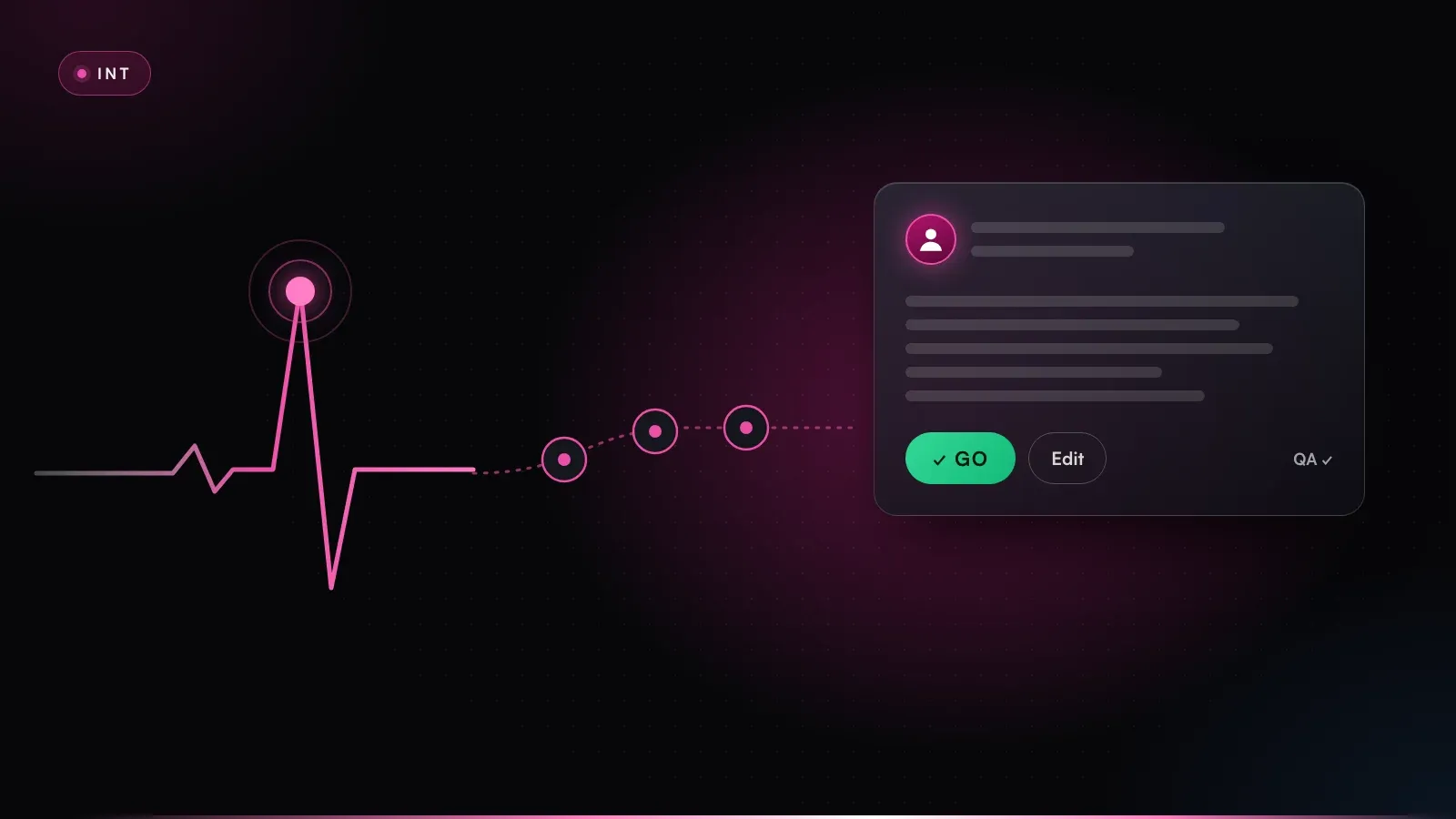
- Detect the signal. The Signal Agent notices an event: an ICP account keeps visiting the pricing page, a relevant role gets posted, a champion moves to a target account, intent data spikes.
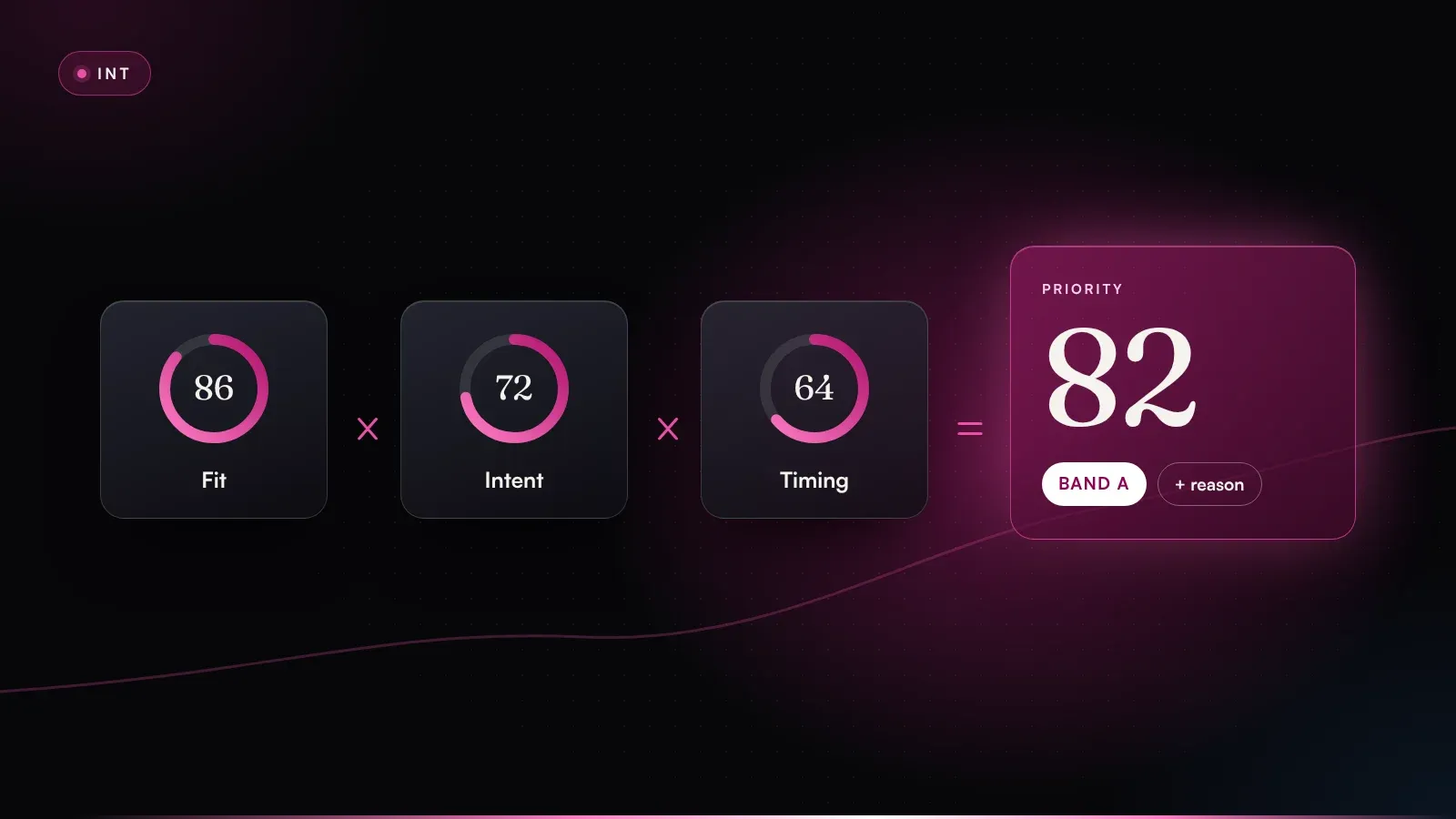
- Score it. Fit × intent × timing gives a priority. Below the threshold, the system deliberately just watches.
- Research the buying committee. Who is likely involved in this decision, which of them can be reached, and what does each role need?
- Propose a draft. The Angle & Content Agent picks the right angle and writes a draft; the QA & Brand Guard Agent checks it. It also proposes channel and sequence, because not every signal deserves an email. Sometimes an audience or a quick heads-up to the AE is the better move.
- Human go. The account owner confirms, edits or rejects with a reason. Only then does anything go out, ideally from their own mailbox.
- Learn. Every decision lands in the change log and decision memory. Recurring corrections become rules in the knowledge base.
How a signal becomes a message that doesn't read like a template is covered in depth in from signal to message. Because one signal almost never covers the whole committee, multithreading with agents belongs in the picture too: which role is still missing, and how do you reach it without steamrolling the account? For the end-to-end flow, see intent-based activation.
Volume isn't part of the equation. If one factor drops to zero, the thousandth email won't help either.
Cost and risk compared
Some of what an outreach bot costs is on the invoice: license, extra domains and mailboxes, data. The more expensive items never show up there, things like burned accounts, domain reputation, legal exposure and AE time in bad meetings. So the comparison looks different from what the pricing page suggests.
| Criterion | Autonomous AI SDR | Manual SDR sequences | Signal-based with human go |
|---|---|---|---|
| Volume | very high | medium | deliberately low |
| Relevance per message | mostly generic | varies by rep | high: trigger, role, proof |
| Brand risk | scales with every error | contained | low, every email reviewed |
| Deliverability | domain burn, rotation needed | medium | low volume, real mailboxes |
| Legal risk in DACH | high for cold email | high for cold email | reviewable per message and channel |
| Knowledge stays with the team | no, it lives in the tool | in people's heads | yes, in knowledge base and change log |
| Visible costs | license, domains, data | salaries, tools | setup, agents, time for the go |
| Effect on pipeline | meetings, often outside ICP | depends on the rep | meetings with ICP accounts |
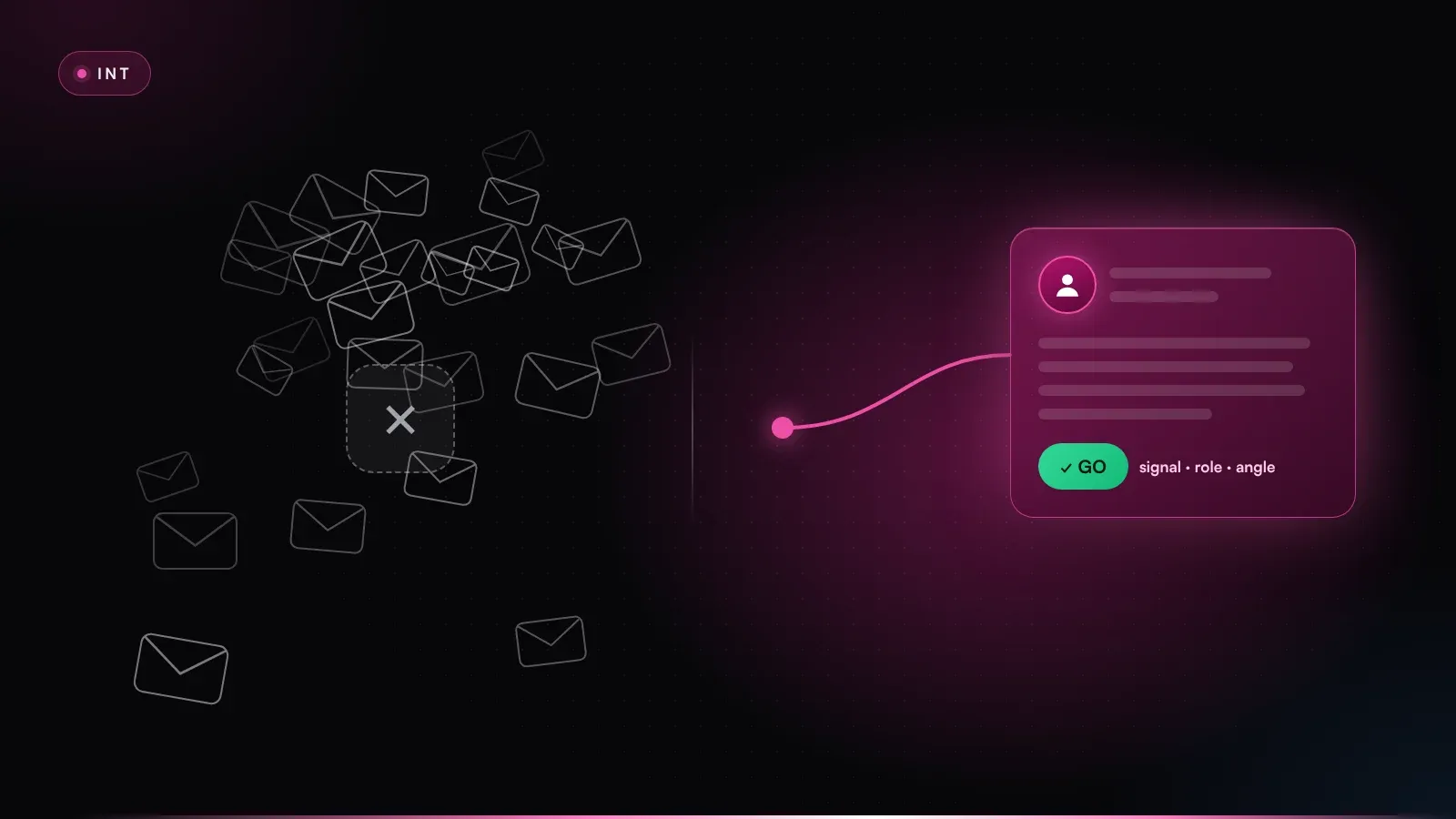
A signal-based system sends less, on purpose. If you have nothing to say, don't send anything.
Example: AI SDR or signals with a go?
A worked, fictional example. A vendor of quality management software for manufacturing sells to industrial companies with 300 to 3,000 employees in the DACH region. ACV is around €45,000, the sales cycle about six months. Two account executives, one SDR, 250 target accounts. The leadership team has an AI SDR offer on the table: 1,000 emails a day, “fully personalized,” meetings guaranteed.
Let's run the rough numbers. 250 accounts with an average of four relevant roles gives you about 1,000 contacts. At 1,000 emails a day, the entire market has been emailed after one day and chewed through after three follow-ups. After that, the tool has no choice but to send beyond the ICP. Then there are the open questions from this article: cold email under Section 7 UWG, how spam filters react, and how a bot handles a reply like “We're already talking to your colleague.”
The team decides differently. Over four weeks, the ICP, the role model and three message angles get documented in the knowledge base, the signal sources get connected and the suppression list is imported. Then the agents run. On a Tuesday, the proposal for one account looks like this:
Account:   Precision parts manufacturer, ~900 employees, 2 plants
Priority:  77/100 · fit 0.95 × intent 0.9 × timing 0.9
Signals:   [confirmed] 3 visits to /pricing and /audit in 6 days
           [confirmed] Job ad “Head of Quality Management” open 9 days
           [plausible] Certification audit in 2027 per trade press
Relation:  Plant manager knows the AE from a past customer project
           [confirmed] CRM history, existing rapport

Proposal (L1 · nothing is sent)
1 Personal message from the AE to the plant manager, audit opener
  Draft: 74 words · angle “audit readiness” (live)
  QA: 1 claim replaced (“100% audit-proof” → approved wording)
2 No cold email to head of QM (vacant) → audience “QM manufacturing”
3 CFO: no direct contact, prepare a one-pager for the plant manager
Channel:   AE's own mailbox · channel rule: existing relationship (verify)
Status:    waiting for go · owner: AE, north region
The AE changes two sentences because he knows the plant manager hates audits that drown in paperwork, and gives the go. A single message goes out.
After 60 days, the team counts accounts. Say 40 approved proposals lead to nine conversations with ICP accounts, five of which turn into opportunities. These numbers are made up for illustration and aren't a benchmark. What matters is the comparison with your own baseline, and whether the domain stayed healthy and not a single account got burned.
Before you buy an AI SDR tool: ten questions
If you're evaluating one of these tools anyway (and there are situations where parts of it make sense), ask the vendor these questions. If they dodge more than two, you have your answer.
- Can I enforce a mandatory human go for every message, permanently, not just during onboarding?
- Does the tool work from my ICP including exclusion criteria, my message angles and approved claims, or from its own assumptions?
- Does it understand accounts and buying committees, or only individual contacts in sequences?
- Does it read and respect CRM context: open deals, owners, ongoing conversations, rejections, suppression lists?
- Which domains and mailboxes does it send from, and how are SPF, DKIM, DMARC and one-click unsubscribe handled?
- How are spam rate and domain reputation monitored, and what happens automatically when they tip?
- Which data sources does it use, where is data processed, is there a data processing agreement, and does the vendor train on my data?
- How does it handle GDPR objections, unsubscribes and transparency obligations, and does that happen immediately and across channels?
- Does it automate LinkedIn actions through personal profiles, and how does that square with the platform's rules?
- How does the vendor define success: emails sent and meetings booked, or pipeline from ICP accounts that I can verify in my own CRM?
The last question matters most. A tool that measures itself on activity will deliver activity.
Which metrics count and which just look good
The dashboards of these tools are full of big numbers: emails sent, open rates, replies, meetings booked. Most of them are vanity metrics. Emails sent measure effort. Open rates are unreliable anyway, thanks to privacy features in mail clients, and “positive replies” often include a polite “check back next year.” Activity isn't impact. Pipeline is impact.
| Metric | What it measures | Why it matters |
|---|---|---|
| Meetings with ICP accounts | Conversations with accounts that fit the ICP | Separates real opportunities from calendar filler |
| Pipeline per account | Opportunity value per worked target account | Shows whether quality beats volume |
| Reply quality | Share of substantive replies (question, referral, meeting) | Polite brush-offs aren't wins |
| Buying committee coverage | Roles per account in conversation | Single-threaded deals die quietly |
| Domain health | Spam rate, authentication, reputation | Early warning before emails land in spam |
| Correction rate before the go | Share of drafts the owner edits | Shows where the knowledge base is missing rules |
I set up the Pipeline Reporting Agent to show these numbers every week. Emails sent appear there as context only.
Three mistakes I keep seeing
- The pilot starts with no baseline. If you don't know how many ICP meetings and how much pipeline per account the team produced before, after 90 days you can only judge activity.
- Automated sending runs off the main domain, the one that also carries your quotes, invoices and support email. That puts more than one channel at risk.
- The go turns into a formality. A go that gets clicked every few seconds isn't a go. You need a handful of good proposals a day and an owner who knows the account.
My take: how to start in 90 days
To be blunt: in sales-led, high-ACV B2B, I wouldn't deploy a fully autonomous AI SDR that sends to cold contacts without a go. The technology isn't the issue. The model optimizes for a problem you don't have and takes on risks you don't need. No pitch, just what I see in projects.
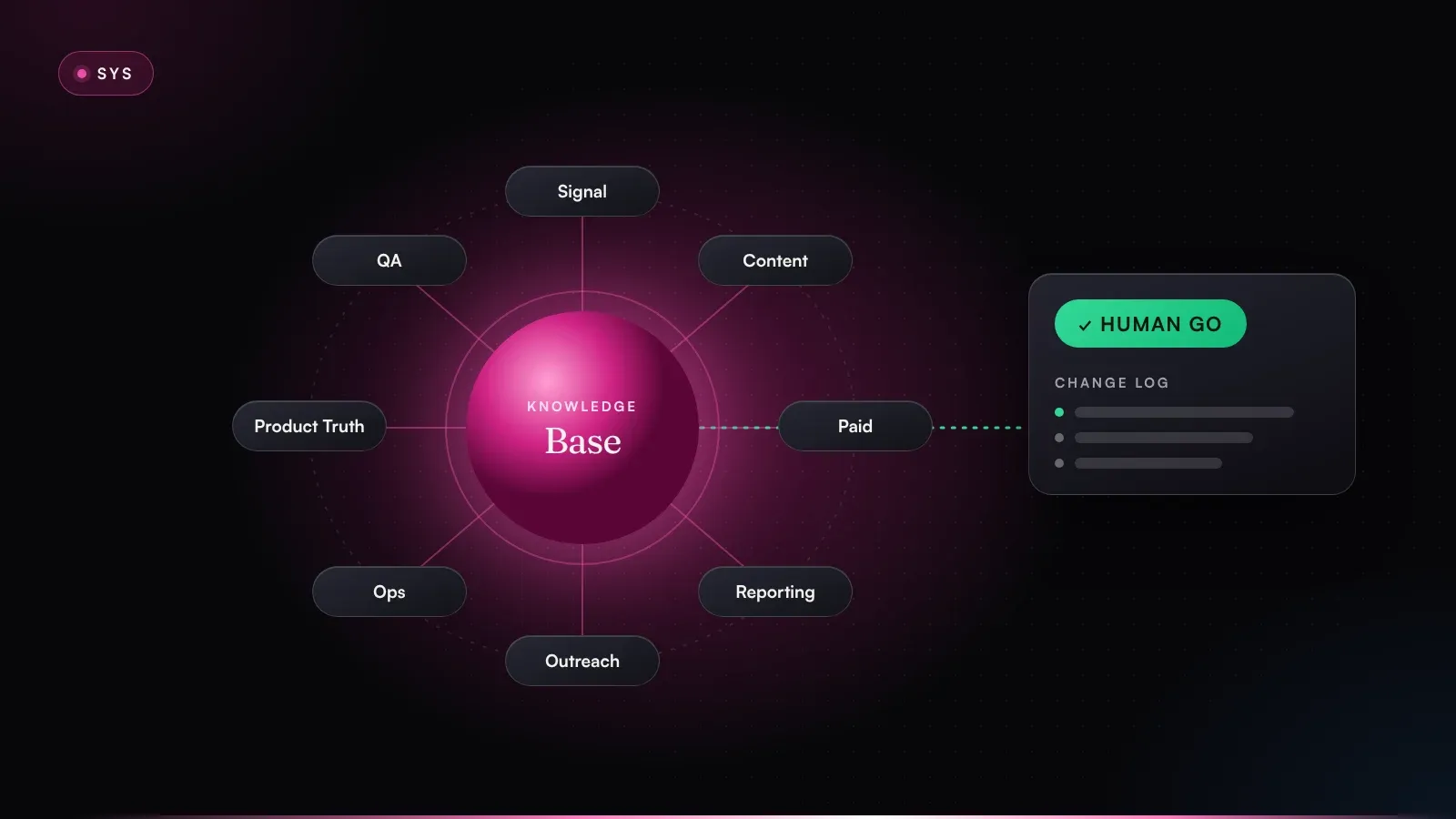
My recommendation: use AI to the max for everything that happens before the message, and let a human decide on everything that goes out. That's slower than a bot, but a lot faster than a team doing every piece of research by hand. Along the way you build an asset that stays: a knowledge base that gets better with every go.
- Days 1–30FoundationICP, angles, domain, legal
- Days 31–60Signals & go20–30 accounts, first gos
- Days 61–90MeasurePipeline per account vs. baseline
- AfterDecideMore accounts, not more emails
Foundation and baseline first, then signals with a go, then measure. You expand by accounts, not by emails.
Days 1–30: foundation
Document your ICP with exclusion criteria, the role model, two or three message angles and approved claims. Check your domain setup (SPF, DKIM, DMARC), set up Postmaster Tools, and work out with legal counsel and your data protection officer which channels are allowed for which contacts. Record your baseline: ICP meetings and pipeline per account over the last two quarters.
Days 31–60: signals and the go
Connect two or three signal sources, such as website visits, job postings and CRM events. Start with 20 to 30 accounts. Agents research and propose; owners approve or reject with a reason. In parallel, agents take over speed-to-lead for inbound and CRM hygiene as approved rules.
Days 61–90: measure and decide
Compare meetings with ICP accounts, pipeline per account, reply quality and domain health against your baseline. Turn recurring corrections into rules. Only then decide whether to expand to more accounts. Whether to send more emails isn't the question.
How permissions, approvals and logging work technically in RevPrime® is covered on the security & governance page. If you have an AI SDR offer on your desk right now: in a free 30-minute diagnosis call, we'll look at what it can realistically do in your market, where the risks are, and whether building from scratch (Build) or repairing your existing outbound (Repair) is the better path.
Frequently asked questions
What is an AI SDR?
An AI SDR is software that uses AI to take over the tasks of a sales development representative: finding contacts, researching, writing emails, sending, following up and booking meetings. Products range from writing assistants to fully autonomous agents that send without human review. In sales-led, high-ACV B2B, the autonomous kind carries the most risk.
Can AI SDRs replace human SDRs?
They can take over much of the preparatory work, such as research, signal detection, drafting and CRM maintenance. In high-ACV B2B, the judgment about which account to approach, when and with what message is better left to people who know the account. The realistic outcome is a smaller team that works with agents.
Is AI SDR cold email legal in Germany and Austria?
Under Section 7(2) no. 2 of the German Unfair Competition Act, advertising by email without prior express consent is generally prohibited, and the law has no general B2B exception for it. Austria's Telecommunications Act 2021 (Section 174) likewise generally requires prior consent. This isn't legal advice: have your specific setup reviewed by a specialized law firm before you start.
What spam rate do Google and Yahoo allow?
Google recommends keeping the spam rate shown in Postmaster Tools below 0.1 percent and never reaching 0.3 percent. Yahoo also names 0.3 percent as the limit. Both additionally require bulk senders to use SPF, DKIM, DMARC and one-click unsubscribe, with unsubscribe requests honored within two days.
Where does AI help in SDR work?
Mostly in what happens before the message, meaning account and buying committee research, signal detection, drafts based on documented message angles, fast response to inbound requests and CRM hygiene. AI saves a lot of time there, and nothing goes out unchecked. Anything that reaches a person at a target account should be approved by a human.
How do I measure whether AI outbound is working?
By meetings with ICP accounts, pipeline per worked account, reply quality, buying committee coverage and domain health. Emails sent and open rates are activity metrics and useful as context at most. Record a baseline before you start, or you'll end up comparing gut feelings.

About the author
Mario Maier
AI-native revenue marketing engineer · founder of igromo
For more than 15 years I've worked at the intersection of marketing, sales and revenue operations, from early-stage setups to scale-ups with multi-stage sales cycles and large buying centers. Since 2019 I've measured my work on pipeline and revenue.
Where do you stand?
The agentic readiness check shows in 3 minutes how ready your marketing is for agents – and which gaps to close first.
Keep reading
All insightsINT18 min read
Fit × intent × timing: an account scoring model sales actually trusts
Build an account scoring model on fit, intent and timing: which signals count, how to weight, decay and set thresholds – with a worked example and start plan.
INT16 min read
From signal to message in 24 hours: signal-based outreach done right
Signal-based outreach turns buying signals into relevant, approved messages within a day. See the six steps, a worked example and a four-week start plan.
SYS24 min read
AI agents for B2B marketing: the complete guide from first prompt to pipeline
AI agents for B2B marketing that move pipeline: definition, architecture, 8 core agents with workflows, what not to automate, KPIs and a 90-day plan.